
Quick answer
Gurupushyamrut yoga (also called Guru Pushya yoga or Guru Pushya Amrit yoga) forms when the Pushya Nakshatra falls on a Thursday. In 2026 it occurs on 23 April, 21 May and 18 June. On 18 June 2026 the muhurat runs roughly from 5:23 AM to 11:32 AM. It is considered one of the most auspicious windows of the year for buying gold, starting ventures and beginning study, but it is traditionally avoided for marriage.
On this page
What is Gurupushyamrut yoga
In Vedic astrology, certain combinations of weekday and nakshatra create especially favourable muhurats. Gurupushyamrut yoga is one of the most respected of these. It is formed when Pushya Nakshatra, often called the king of the nakshatras, aligns with Thursday (Guruvar), the day of Guru or Jupiter.
Both Thursday and Pushya are linked to Jupiter, the planet of wisdom, growth and prosperity. When they overlap, tradition holds that Jupiter’s qualities are amplified, which is why the day is treated as ideal for actions meant to last and grow. The word Amrit, meaning nectar of immortality, points to the belief that results begun in this window endure.
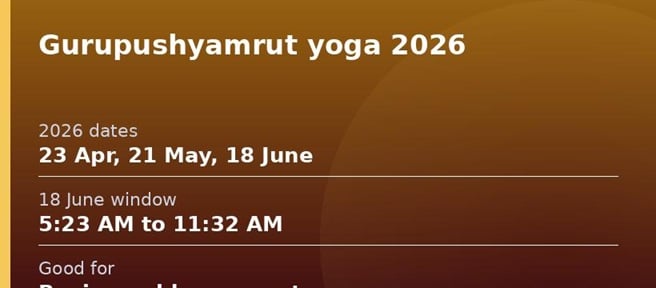
Gurupushyamrut yoga 2026 dates and timings
This yoga occurs only a handful of times a year. In 2026 there are three occurrences. Timings shift slightly by city because they depend on the moon entering and leaving Pushya Nakshatra, so always confirm for your own location.
Why it is considered so auspicious
Pushya comes from a root meaning to nourish or to make flourish, and the nakshatra is associated with stability and permanence. Jupiter adds wisdom, ethics and expansion. The combination is read as a blend of nourishment and growth, which is why elders recommend it for things you want to take root, such as a new business, an investment, or a child’s first lesson.
Classical texts treat Pushya with unusual respect. Authorities such as the Brihat Samhita and Muhurta Chintamani rank it among the most favourable nakshatras for stable and prosperous undertakings, and the symbol often given for it, a cow’s udder, reinforces the idea of steady nourishment. Tradition even places it on a level with major occasions like Akshaya Tritiya and Dhanteras for auspicious purchases. That long lineage is a big part of why the day still draws crowds to jewellers and showrooms.
Interestingly, the third 2026 occurrence lands on 18 June, the same week as International Day of Yoga. If you are planning a fresh wellness habit, you can read about this year’s celebration in our guide to the International Yoga Day 2026 theme and start a daily practice with a simple morning yoga routine.
A favourable window for students and new ventures
Pushya is closely tied to learning. In many families the nakshatra is chosen for Vidyarambham or Aksharabhyasam, a child’s first formal lesson, because Jupiter, the cosmic teacher, is believed to bless the beginning of study. For older students, the same reasoning is sometimes applied to starting a new subject, opening a fresh notebook, or beginning serious preparation for an exam.
The window is equally associated with money and growth. Buying gold or silver, opening a savings or investment account, and laying the first stone of a home or business are all traditional choices. The thread connecting these is permanence. Pushya means nourishment, and the belief is that what is nurtured here will last. Whether or not you follow astrology, choosing a calm, intentional morning to begin something important is a sound habit in its own right.
What to do and what to avoid
Common observances include rising early, bathing, wearing clean and often yellow clothing, lighting a lamp, and offering prayers to Lord Vishnu and Goddess Lakshmi. These are cultural practices and you are free to follow them in whatever way fits your beliefs.
An important note on timings
Different panchang sources may list slightly different start and end times for the same date because they calculate for different cities and use different rules. Treat the windows above as indicative. For a decision that matters to you, check a panchang set to your own city, or consult someone you trust.
Whether you read this as astrology or simply as a nice cultural prompt to begin something good, the spirit is the same: pick a clear morning, start with intention, and follow through.
Keep reading
